

A meteoroid tore across the skies of Northeast Ohio and exploded into bits, scattering from in Lake Erie to throughout Medina County.
On March 17, 2026, Many Ohio residents witnessed and videoed the event, with television news and social media posts capturing the trail of light descending downwards. The meteoroid’s sonic boom upon exploding caused windows to shake and made a thundering sound.
Ralph Harvey is a professor at Case Western Reserve University with an expertise in planetary materials, and he was at home at the time of the meteoroid; he heard and felt the boom of the impact.
“I heard this horrible thump. I just assumed a tree had fallen on my house from the fact I could hear and feel it as well. I looked around, but there were no trees on my house. I thought maybe it was an earthquake, but I started getting calls from friends at NASA saying, ‘There was just a meteorite over here. Did you see it’?” Harvey said.
Harvey’s research has focused on areas such as martian meteorites, micrometeorites and meteorite recovery. He even has an asteroid named after him. Having seen and studied many astronomical events, Harvey understands the significance of this meteoroid.
“These are very energetic events. A lot of times people on the ground think it is happening one street over, when in fact, it is happening fifty kilometers above their head. At the speeds these things are traveling, even in the tenuous atmosphere, it is like a brick wall for these objects,” Harvey said.
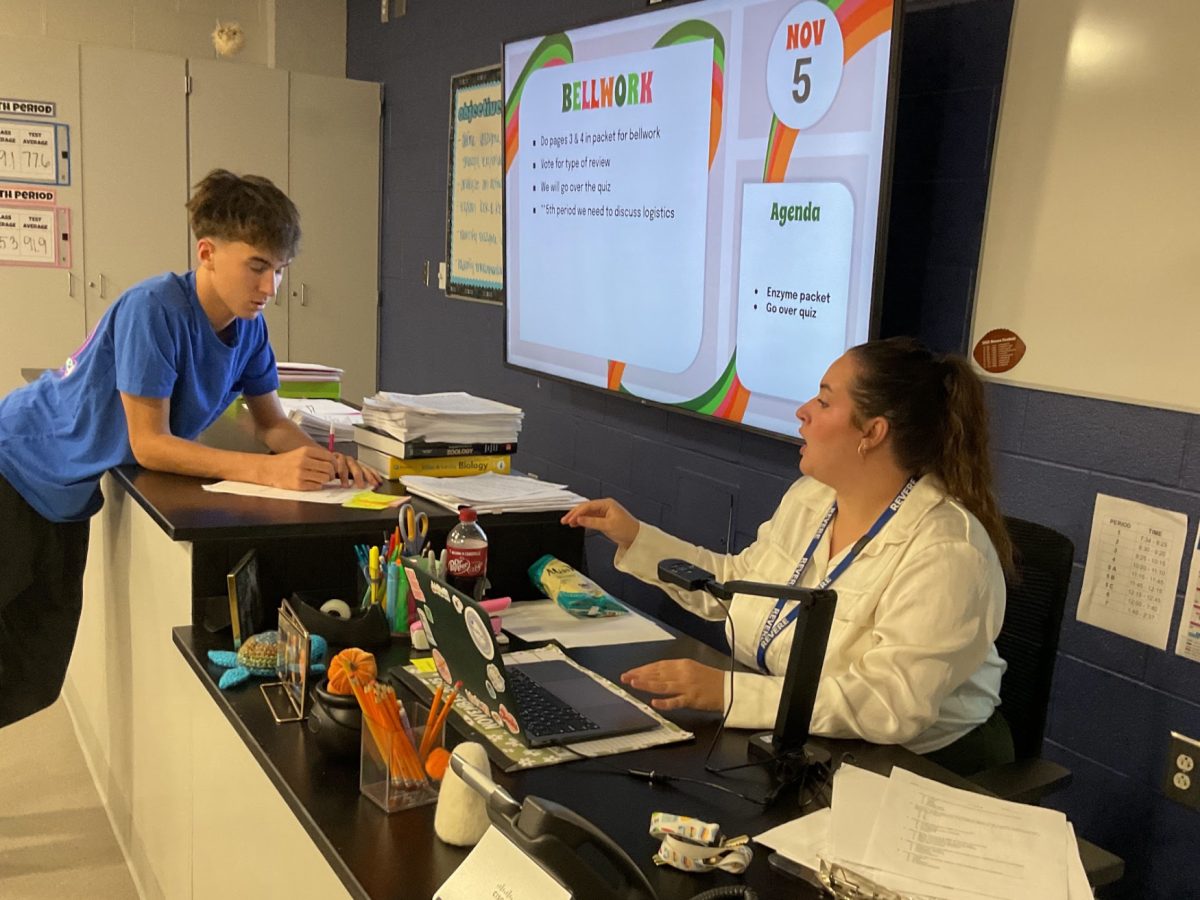
While Revere High School astronomy teacher Robert Krisch was unable to see or hear the event, he was keenly interested in it.
“[The meteoroid was going] 50,000 miles per hour. That meteor was about six feet across. It was the size of a minivan,” Krisch said.
The word meteor actually refers to the light produced as it burns. The rock that is in the air is known as a meteoroid, and once it hits the ground it is a meteorite. The rock that was seen flying through the sky never hit the ground. Rather, it exploded in the air, creating a super sonic boom and scattering bits of rock on the surrounding area.
“[The meteoroid] is carrying a tremendous amount of energy, [and] the rocks do not compress very well, [so] they tend to fracture or melt rather than absorb [the energy]. Elastically, things start to come apart. When the change gets too much for the rock to bear, it blows up,” Harvey said.
Krisch used an analogy to describe the break up and explosion of the meteoroid.
“[The explosion] is kind of like an ice cube put in hot soup. You put an ice cube in hot soup, and it goes snap and crack. Well, an asteroid coming from space might be very cold from outer space, and it heats up to thousands and thousands of degrees as it goes to the atmosphere. And like an ice cube being put in hot soup, the ice cube will expand and crack,” Krisch said.
The meteoroid made a loud, explosive sound that was heard from many miles away.
“There were people who heard this literally fifty miles away or more, in some cases one hundred miles away. That was the explosion that was high in the atmosphere, which would have allowed the sound to transmit much greater distance,” Harvey said.
Harvey said that the sound was caused by a combination of forces: the explosion of the rock and the rock and its fragments traveling faster than the speed of sound caused a sonic boom.
Meteoroids can be made out of multiple different types of materials.
“Sometimes they are made of iron, nickel, sometimes they are made of ice. Sometimes they are made of different types of rock. This one was rock,” Krisch said.
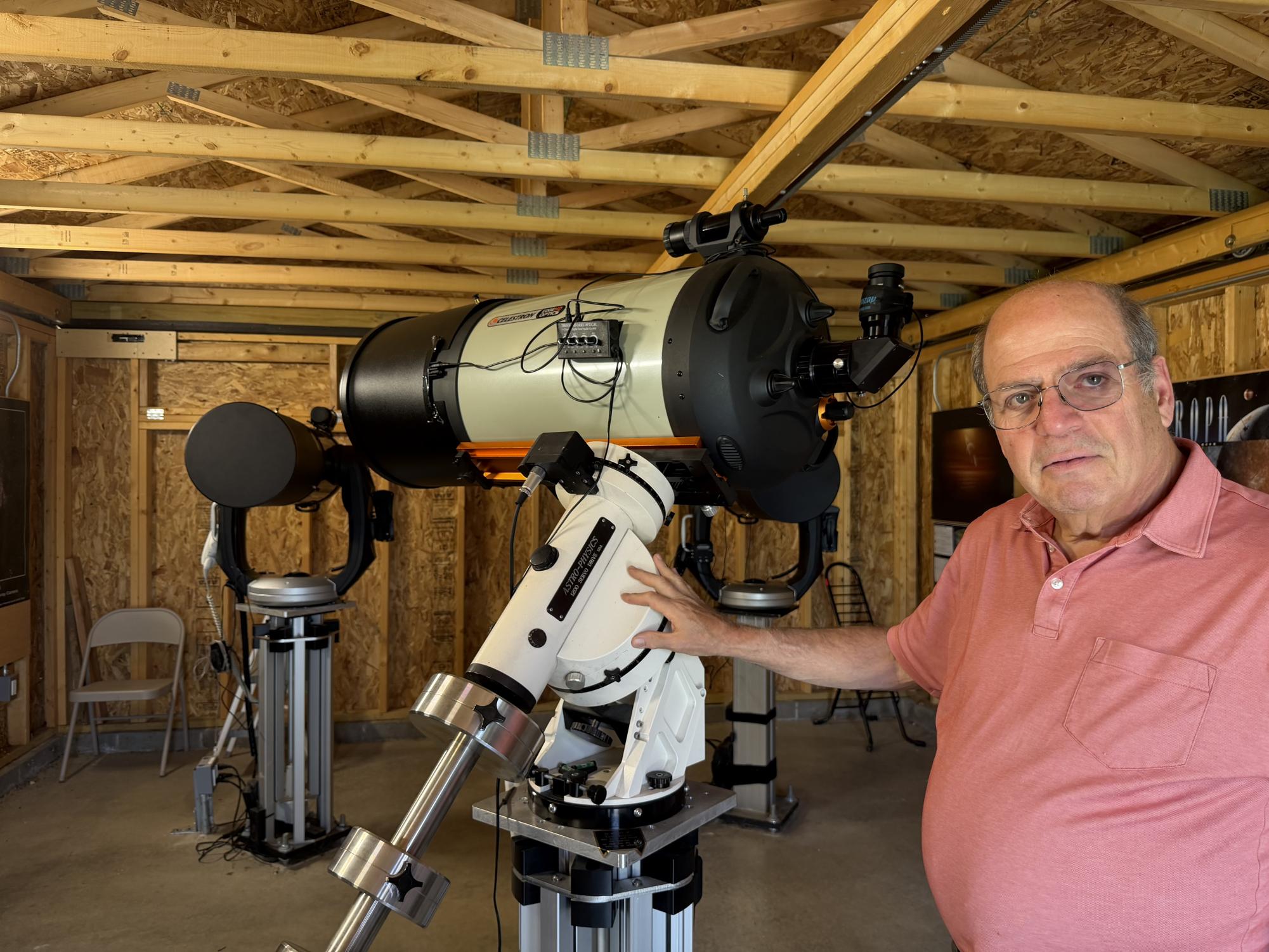
Local amateur astronomers and enthusiasts are able to witness events such as this through high tech equipment at the Summit County Astronomy Club’s observatory, located in the Bath Nature Preserve. The facility has an array of telescopes and other gadgets gathered by John Shulan, the club’s president, over several years.
“We have great programs; we have world class equipment,” Shuland said.
The observatory is a James Webb Space Telescope official site and is well regarded in the local astronomy community.
“Our observatory we have out in Bath is rated number eight in the world for amateur observatories. We have a great facility out there,” Shulan said.
Shulan invites anyone over the age of seven to use the equipment to observe space objects. He hopes that doing so will get people interested in the field and wanting to learn more about the world around them.
“That is the way I like to present science to people, just to get them thinking about it. We do not all have to be mathematicians or scientists or physicists, but there are some easy ways to understand some of the most perplexing questions that we have,” Shulan said.
While some people enjoy looking at the sky to stargazing, others want to find pieces of meteorite on the ground. Meteorites can be valuable for enthusiasts looking to add to their collection and people looking to sell them for a profit.
“A lot of private collectors descended immediately on Medina County. There were some really nice pieces that were picked up,” Harvey said.
Other people looking to make a profit sell the meteoroids.
“There is a lot of money to be made in asteroids. There are conventions where people will sell them. I went to one recently where people were selling bits of asteroids,” Krisch said.
While a meteoroid such as the one seen in Ohio is rare, meteoroids themselves are not, with many tons of space rock hitting the Earth.
“There are 5,000 tons per day of those rocks coming in. It just so happens that that one was large enough that we actually got to see it,” Krisch said.
Despite that it is this common of an event, Earth largely does not have to worry about the threat of meteorites. Fortunately, it is protected from many large and dangerous asteroids.
“We have a bouncer, and that’s the planet Jupiter. Jupiter is so large that it absorbs many of the asteroids that would hit us and kill us. Once in a while, one gets through,” Krisch said.
Meteoroids large enough to be dangerous to the planet are extremely uncommon, and only happen every many millions or billions of years.
“We are fine. The extreme rarity of that happening where it would be devastating is so exceedingly rare that it killed the dinosaurs 65 million years ago,” Krisch said.