
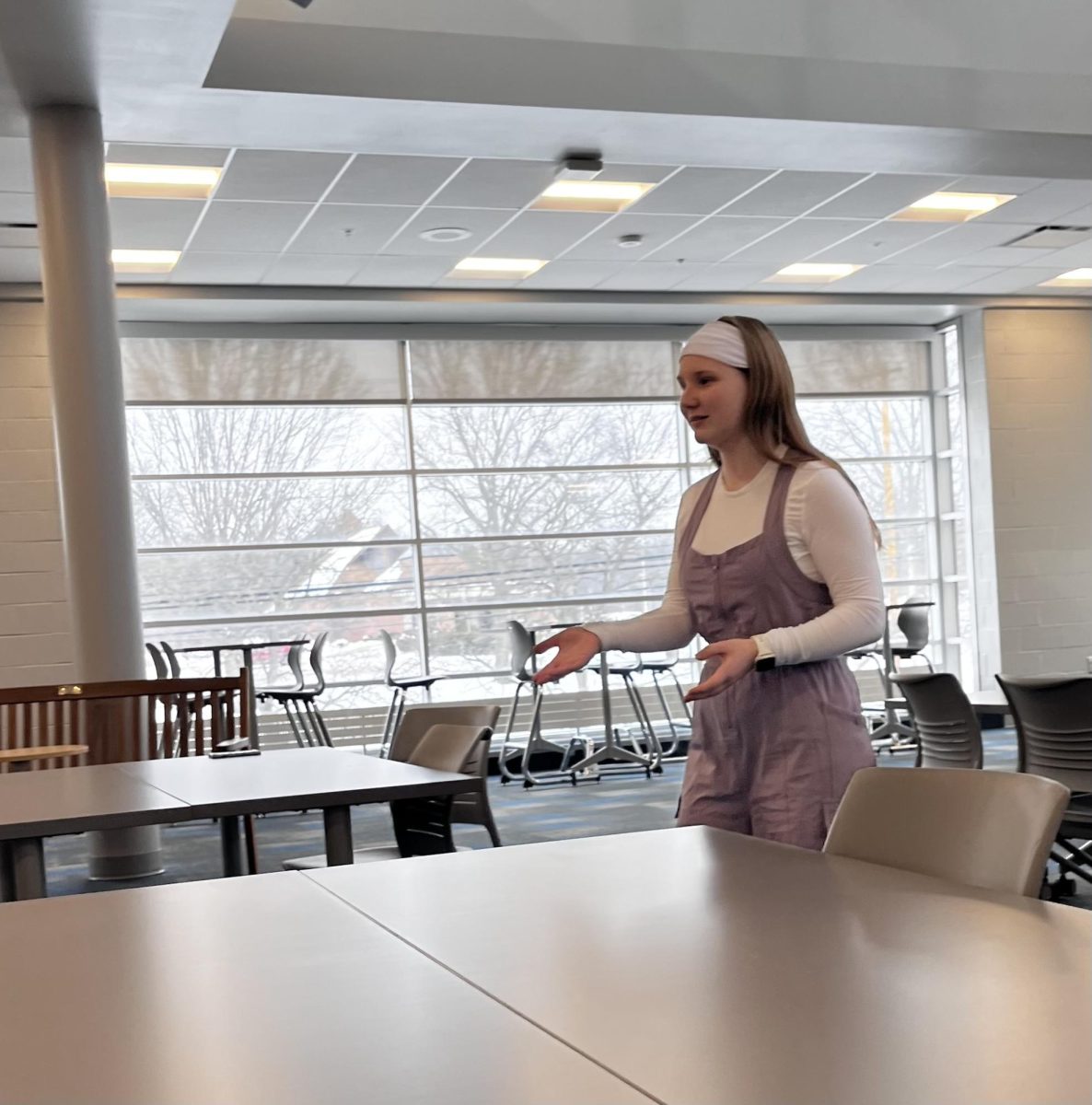
Revere High School (RHS) is stepping onto the stage of the English Speaking Union’s (ESU) National Shakespeare Competition for the first time.
The competition, on February 28, is an annual, nationwide program sponsored by the ESU as a way to give students the opportunity to perform Shakespare’s monologues and sonnets as a way to explore his works. Competitions are held at schools across the nation. The winners of these competitions go on to branch competitions in each region, and the winners of branch competitions face off in the finale in New York City. Then the first place winner participates in the British American Drama Academy Mid-Summer Conservatory Program at Oxford.
Junior Daphne Tucker won the RHS competition and will represent Revere at the branch competition in Cleveland.
Sarah Pine, English teacher and the Director of RHS’s theater program Revere Players, has a passion for the performing arts and took an interest in getting RHS to participate in the competition.
“This is the first year we have ever participated. The competition has been running for years, but we have never been involved before. It was something I kind of learned about at the tail end of last year. I was curious about getting involved, and on a whim one day, I signed us up for it and was like ‘We can do this’,” Pine said.
Pine hopes to use Revere Players as an outlet into getting more people to participate and try out for the competition.
The school level competition worked similarly to competitions, where Pine and two other judges would listen to the students’ monologues and grade them based on the rubric that the judges in the competitions would use. Based on this, they would select one winner, and that winner would represent RHS at the competition.
“The idea is that schools or smaller organizations can run essentially their own competitions, which is what we did here at Revere. We had four participants this year, and the students who choose to participate need to be in grades nine through twelve and have a book of pre-curated monologues that they choose from. Students select a monologue from that book, they get scored and then from there we choose a winner. The winner of that school competition goes on to the branch competition in Cleveland,” Pine said.
The judges in the branch competition grade the competitors based on their understanding of the text and expression of the character they are portraying.
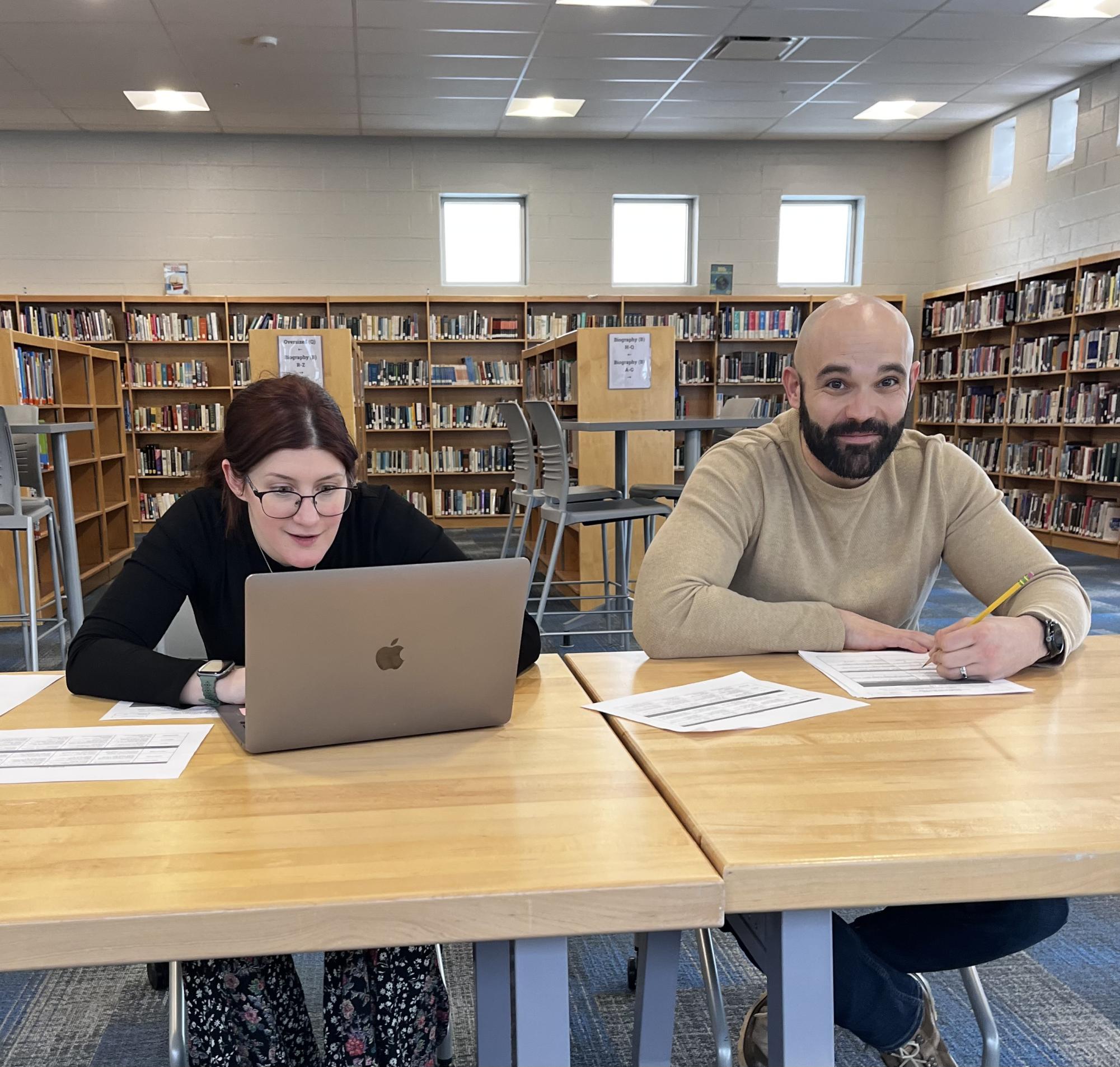
The three judges for the RHS competition, Pine; Pine’s husband, Joe Pine; and Revere Players Assistant Director Kelsey Johnson want to grade the students with the same rigor as would be seen in the branch competition.
“There is a very specific rubric and score sheet that comes from the English-speaking union. Every judge at any competition is using the exact same evaluation criteria. We kind of split the difference when it came to judges. It was myself and Mrs. Johnson, who is kind of the theater-slash-English teacher representatives on the panel, and we also had my husband Mr. Pine put in, who has a fifteen-year track record of working with the Ohio Shakespeare Festival as a Shakespearean actor,” Pine said.
To Johnson, Tucker’s performance epitomized what they were looking for in the competition.
“Daphne is a person who is invested. You can see how much she is interested in this, how curious she is about it, and does her homework when it comes to performing these pieces. You can see that she put in the effort, she understood the intention and the rhyming pattern to deliver a beautiful piece,” Johnson said.
The monologue Tucker performed was from As You Like It, Act Three, Scene One and was a line from the character Rosalind. Tucker chose this monologue because Rosalind’s character resonated with her.
“It really spoke to me as I felt Rosalind’s character was a lot like mine, we kind of have the same personality,” Tucker said.
Pine will then coach Tucker over the next few weeks to prepare her for the competition. Tucker explained how she will work to prepare for the branch competition.
“Hopefully this week and next week I can get it all memorized and then the weeks after that, I will focus on techniques and how somebody in Shakespearean time would perform it. Mrs. Pine knows a lot about Shakespeare and how people in that age would perform it, which is more of what they [the judges] are looking for,” Tucker said.
Pine views this first year as a prologue to a continuing, successful program.
“It’s my hope that as we start to do this competition and grow it a little bit more, that we would have more time to have workshops and really work with kids. In my dream, I would love it to be an incredibly competitive program, and we’re just sending winners to that Cleveland competition every year. And for you know, we’ve got a couple national winners under our belt,” Pine said.
Johnson sees the benefits of the competition even extending beyond promoting the appreciation for Shakespeare and theater.
“It [the Shakespeare Competition] is the cousin to Speech and Debate and Model UN and all of those things where you stand up in front of a room. You have prepared, you have organized your thoughts, and you are presenting something, that is such a valuable skill,” Johnson said.