

Every Saturday morning cars rush down East Royalton Road off Interstate 77. People headed to work, out for their morning coffee or stopping at the gas station, would never know that just off the road a team of ten athletes are training in preparation for the National Gymnastics Competition. When they are not at the gym, two of those athletes spend their time roaming the red, white and blue walls of Revere High School (RHS).
After qualifying at the regional competition, RHS senior Hank Gretter and sophomore Peter Allen along with the other members of their team, are on their way to the national competition in Oklahoma which begins May 6. The event is held over the course of five days. The first day is a practice, and the second and third serve as preliminary competition and the fourth is a semi-final round before the ultimate national competition on the fifth day. According to Gretter, making it to day five is an amazing accomplishment.
“[The fifth day is an] elite competition, [a] more exclusive competition, and that’s where you really see real talent. And if you qualify there, I think you can be pretty proud and pretty confident that you’re a good gymnast,” Gretter said.
Gymnasts progress throughout 10 levels of difficulty, the first level being the beginner level and the tenth being the most advanced. Level 10 gymnasts practice twenty hours a week year round, with their competitive season running from December up to Nationals. Gretter is a Level 10 gymnast and has been competing for thirteen years whereas Allen is also Level 10 but has only been competing for closer to eight years. Both athletes have trained at Gym World in Brecksville their whole career, but Gretter has been under the guidance of Coach Greg Skupski for his entire career while Allen has experienced a larger variety of coaches.
According to Skupski, the boys have each had their own strengths that have supported their success. Looking back at his first few years, Gretter was not always a standout gymnast, but his patience and trust in the process have allowed him to stick with harder skills and master them. In addition, Skupski noticed that Gretter naturally emerged as a leader and has added a lot to the culture of the team.
“There’s not an instant payoff when you do things. So [Hank] has been really good in the last couple years at just keeping his head down and doing the things over and over and over again. It’s hard to impress upon, especially teenagers, that you just have to do it again and again and again. So that definitely lately has been his thing. He’s probably one of our best at repetition,” Skupski said.
Skupski noted that many gymnasts in Allen’s age group struggled with fear because many of the skills gymnasts perform are terrifying and often foreign-feeling. According to Skupski, Allen was able to overcome that fear quicker than others in his group.
“Every generation has their own strengths and weaknesses. [Peter’s] group struggled a lot with fear because a lot of the stuff they do is terrifying. And I get it because that’s why I quit gymnastics; it was too scary. So his generation was a little bit afraid of things. And to his credit, he has probably done the best at pushing through. He’s the one that has slowly but surely been able to like, push through that,” Skupski said.
In competition, a gymnast is scored by their difficulty and their execution. The difficulty evaluates the complexity of the routine whereas the execution score grades the form and technique of the skill. The scores are then combined and penalties are subtracted to reach a final score. Gretter has been at an advanced level for a few years and has seen what some of the more complicated skills look like in high-achieving competitions. Abigail Gretter believes this has motivated her son to work hard and master more complex routines.
“For Hank, year after year, he gets stronger, the skills get scarier, and they’re more challenging, and he masters them and moves on and continues to do it. With these national competitions, when you finally meet up with the kids from other fifty states, you’re seeing what’s possible. And I think it really has inspired him to then go back to the gym and have a conversation with his coaches about where he wants to grow and what he wants to try versus what he wants to table,” Mrs. Gretter said.
As a fifth grade teacher Allen’s mother Lisa Allen has a unique perspective into how students are driven and what style of organization or learning works best. Over the years she has noticed how well he responds to setting goals for himself and working towards them.
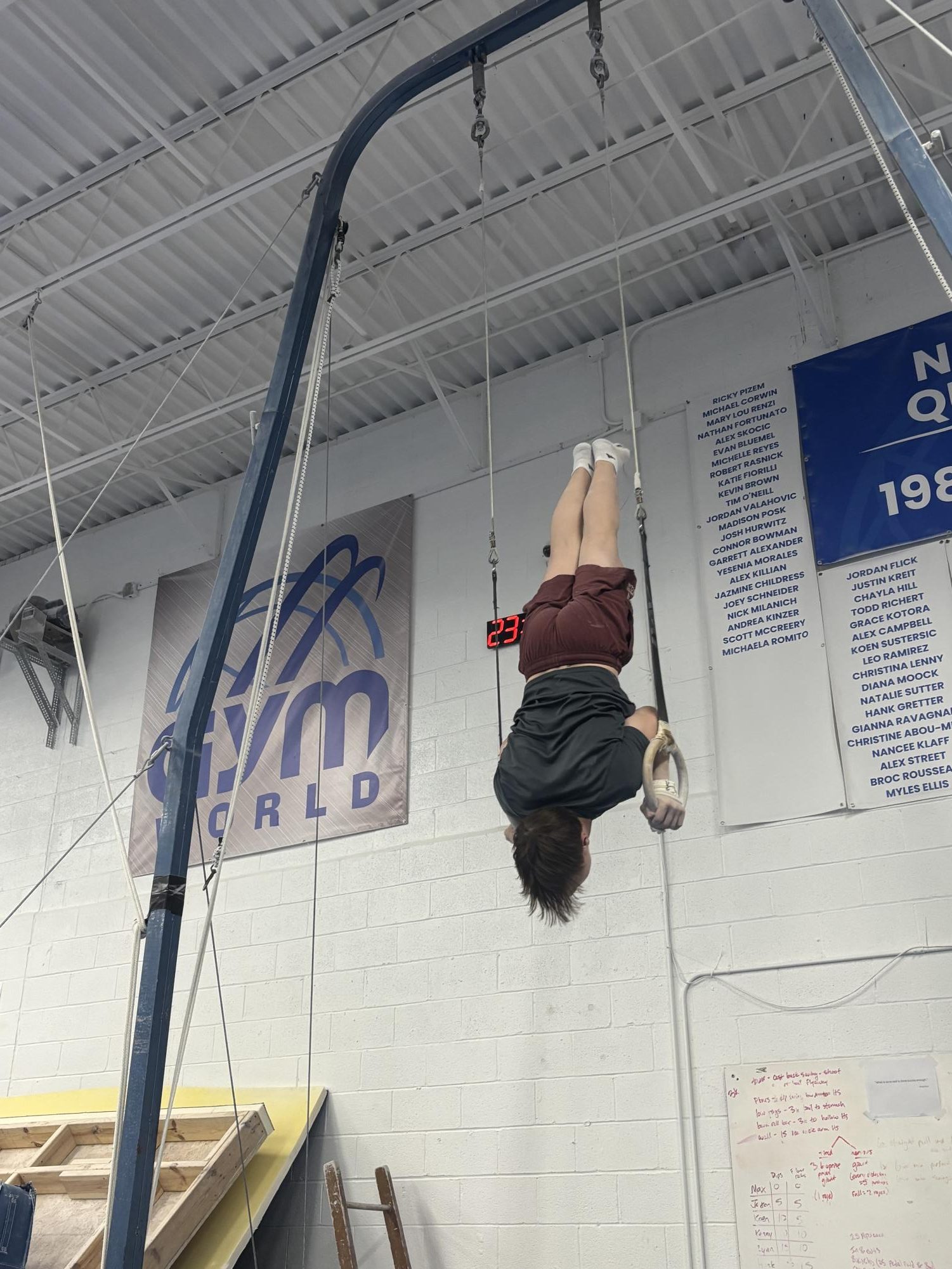
“A lot of it I think is just having that drive, knowing what you want. And he does, he has a goal in mind and when he has a goal, he is determined to reach that goal. He is very goal oriented and very driven to succeed,” Mrs. Allen said.
In men’s gymnastics athletes compete in six different skills; floor exercise, pommel horse, still rings, vault, parallel bars and the horizontal bar. Differing from women’s gymnastics, men’s skills focus more on power, continuous motion and strength. Out of these six, Allen prefers the floor routines because there are so many different things a gymnast can do. Gretter enjoys the floor but prefers the horizontal bar.
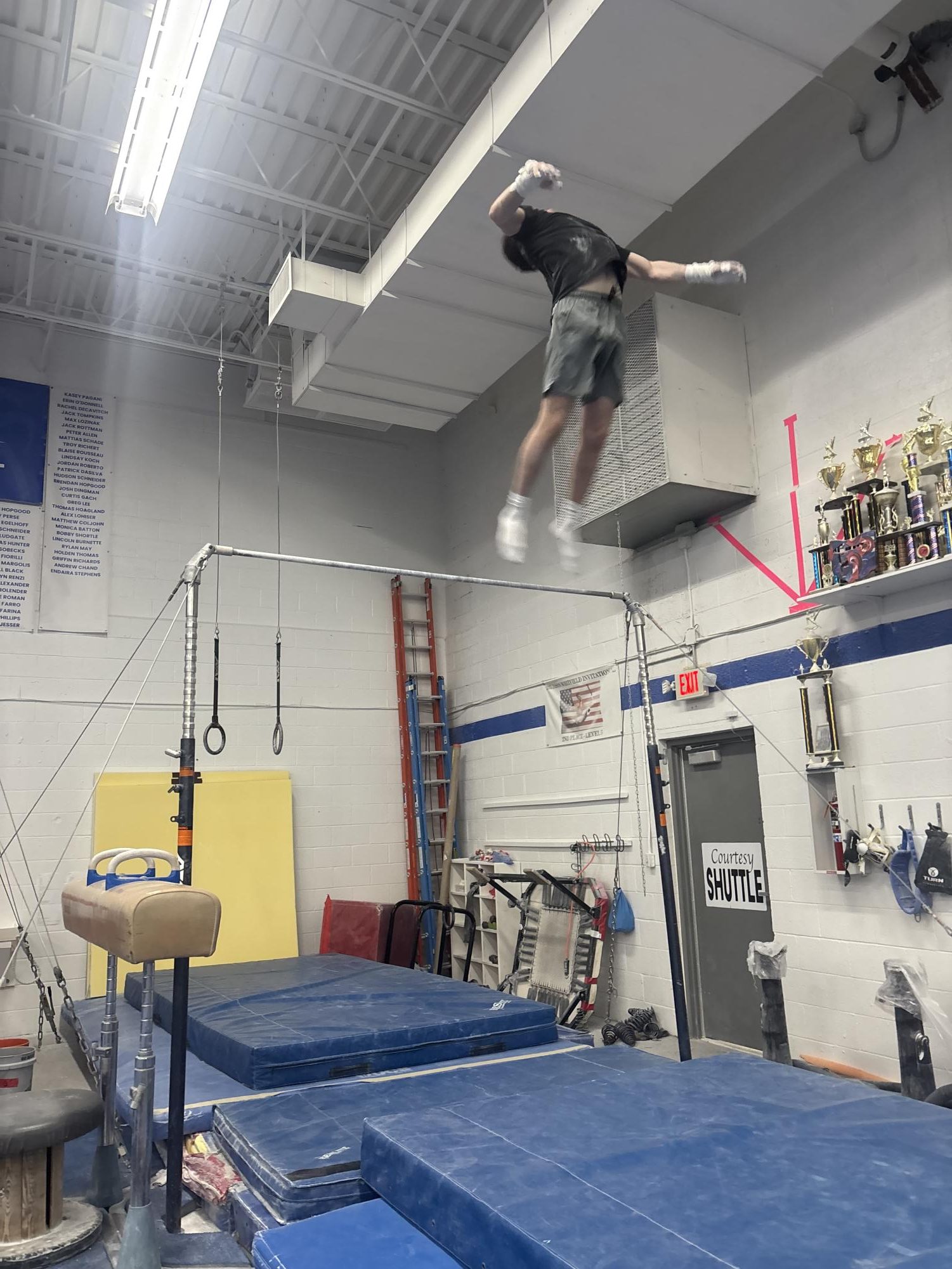
“I like high bar right now. I score well on high bar I think all meets, but one this year I’ve gone top three at high bar. Last year I was rough on high bars, but I had big skills and this year I’ve refined them,” Gretter said.
Looking towards nationals, Allen believes he has a good chance at qualifying for the fourth and fifth days, although he would like to improve a few areas a little more. Gretter is confident he can qualify as well if he performs the way he did at regionals.
“Based on my scores at regionals, I should qualify. But there’s no guarantee. My regional meet was pretty good, so any major mistake could mess it up. Or the [score] could be lower than I’m anticipating. But I think I have a good chance,” Gretter said.
Any high-pressure competition can bring about nerves or doubts, but the boys have their own ways of combating anxious thoughts or behavior. For Allen, reminding himself of what he has accomplished at practices and being confident in what he knows he can do provides that extra bit of support. Gretter has a similar approach but his ritual includes his salute, the motion a gymnast makes to signal the start of their routine.
“Sometimes I get nervous before, but as soon as I salute I’m not nervous anymore, and it’s because I’m confident in my skills. I don’t compete in anything that I’m not conscious of how I’m gonna do. I know that I will catch the skill, and if I miss, it’s not a big deal. You get up and you go again. I can be mad after the routine’s done, but during the routine I just have a calm mind,” Gretter said.
Skupski also has a few tricks to prepare his athletes, one being just talking them through what the competitions will feel like. He explains to the boys that they will be nervous but that it is better to understand the nerves and expect them then ignore them. In addition, he utilizes a gym tradition to simulate meets.
“At the gym, we have a bell that you ring when you learn a new skill. . . . [On] the week leading up to nationals, we will ring the bell and have them show one or two routines to the whole gym and try to just simulate [a meet]. Usually we will try to pick the events that they tend to get the most nervous [such as the] pommel horse, an event where nerves don’t help, or if they have a routine that’s particularly hard for them,” Skupski said.
Due to the risk of the sport and the workload, injury is common. Skupski does his best to combat potential injuries by having the boys warm up before practice and also has them visit the gym’s physical therapist.
“[The gym has] a physical therapist who comes once every two weeks. So if there’s any little aches or pains, you can go and see her and then she’ll let you know if it’s serious. It’s really good when . . . you don’t know if you should push through [pains]. And then just in general, one thing I [say] is when you are feeling good, do a lot. That way, if you come in tomorrow and your knees hurt, then it’s fine because we’ve already done the work ahead of time,” Skupski said.
Within the gym discipline and respect are two important values that are instilled into the athletes. Although the boys compete for their open personal best, everyone contributes to an overall team score. According to Gretter, this year the boys could not always compete as a whole team because some gymnasts were out sick, others had individual competitions and a few left the team. Allen looks forward to when the team can compete together.
“I’m excited to compete with the whole team. There have been times where we have been split in half, and it’s gonna be fun to compete with everybody. I want to make day two,” Allen said.
Some male gymnasts leave the sport around middle school or after their first few years of high school because as their level increases their skills become tricker and scarier. Unlike other athletes, Gretter and Allen have stayed committed to the sport and plan to finish out their high school career. Although Allen has two more years before he has to make a decision, both boys are leaning towards continuing in gymnastics clubs after high school instead of a college team. Many college teams have begun to decrease their team sizes as the sport can be less popular.
“[There is a lack of men’s gymnastics teams in college] because the sport’s dead for men. Women’s gymnastics is doing great. [Men’s] just doesn’t get the viewership, it’s all about revenue. So I mean it could change, but it’s bigger in Europe . . . [and] the Asian leagues; Japan and China are pretty big on gymnastics, but not too much in the U.S. right now,” Gretter said.
Men’s gymnastics is not as popular as women’s gymnastics and as a result many people do not understand there are large differences, not only in the skills and demands, but in the approach to the competition as a whole. Skupski explained that men can experiment a bit more with their routines because they have more events to fall back on.
“[Men’s gymnasts] do six events and [women’s gymnasts] only do four, it makes our meets much more forgiving. If you fall on your first event, a fall for [the] girls is kind of the end of it. It’s a big deal. Much bigger deal. But with six events and the score going a little higher it’s a little more forgiving. So girls have to be a little bit better at the things [they’re] competing; [they’re] trying to do everything perfectly. We tend to operate at the front of our ability where it’s like you learn a new skill, you throw it in there and see what happens. The girls, they’re only gonna do something usually if they’ve done it a million times because there’s not much forgiveness in their rules,” Skupski said.
Mrs. Gretter first enrolled her son into gymnastics because she felt he would appreciate the structure. Although the first few practices were tough, he continued going and ended up thriving in the sport. Over the years as he has gotten more serious about gymnastics and his academic load has grown, Mrs. Gretter has learned the best way to lend support when things get overwhelming.
“As a parent, I really just kind of listened to [Hank] when he seemed overwhelmed. There are things that I can help him navigate and negotiate. And just open communication so that when he looks like he’s struggling, he feels like he can say this is really hard. Or support him and let him know [he’s] doing a really good job, even though this is tough,” Mrs. Gretter said.
Top athletes are often asked how they are able to balance a social life, academics and competing at a high level, but according to Mrs. Gretter, time management is something her son has locked down. With six different disciplines to master in the men’s league, gymnastics demands a short memory and ability to adapt. Over the years, Gretter has implemented these skills into life outside the gym.
“[Hank has] become very mindful of when he’s gotta really lock in or focus on the schoolwork piece of [his life], and knowing that he’s gonna have to do the same thing when he’s at the gym. So [regarding] time management, I think has been the biggest takeaway for preparing him for college because the infrastructure for the gym and schoolwork has just been ingrained in him over the last decade,” Mrs. Gretter said.
Both Allen and Gretter were honored as 2026 All Americans, an award that recognizes commitment both to their education and their sport. Mrs. Allen believes a part of her son’s success in the classroom is attributed to the discipline he learned in the gym.
“Most gymnasts are very good at planning their time because they don’t have a lot of time. That is something that we have just had to work on with him ever since he was young. School comes first, you have to have a plan and if you know that you have things that are coming up, work ahead, don’t wait until the last minute. He has learned that discipline from the gym and the coaches are great with reinforcing all of those things,” Mrs. Allen said.
Outside competitions, the team takes time to invest back into the gym. They hold funding events a few times a year including a camp at the gym for younger athletes. Gretter explained that the funds are usually put towards a team trip where the boys get the chance to compete at a meet outside of Ohio.
“[The team will] usually hold a camp at the gym, so you get all the younger guys in. The parents pay, and we coach the younger guys, give them a camp; it’s the Level 10s do it. That usually does fund our team trip we do every year. We go to a meet, and it’s usually a pretty good spot. We tried to go to Minnesota this year, . . . but we ended up changing to Indianapolis instead. It was still fun. We’re undefeated this season. We had a good time,” Gretter said.
Gretter and Allen will compete in Oklahoma the week of May 6. Throughout their time at Gym World, the boys have learned how to face fears, manage time and stay disciplined even when things get busy. Although this will be the end of Gretter’s high school career, the lessons they have learned and accomplishments they have made thus far will follow them as they transition into the next chapter of their lives.
Click Here to see a highlight reel of Allen’s and Gretter’s skills from the Regional Competition.


