When a winter storm is on the horizon and cold weather is brewing there is only one question on students’ minds – will we have a snow day? They scan every news outlet and weather app, monitoring social media closely for any updates. As much as students may want to wish the magical day into reality, the final decision is out of their hands.
While many hands go into deciding if a snow day is necessary, it is Revere Local Schools’ Superintendent Dan White who has the power to make the final call. When talk begins of bad weather, he will coordinate with School Resource Officer (SRO) Scott Dressler who reaches out to the local police stations in Bath and Richfield to determine if there have been any accidents or reports on the roads.
“Officer Dressler will call both Richfield and Bath police departments and fire at times and just say, ‘Hey, are we having any accidents reported? What are the road conditions like? What’s being reported around town’?” White said.
White and his team also keep an eye on weather reports across the different news outlets as well as weather apps to stay in the know.
“We’re looking at the National Weather Service. We’re monitoring different apps for weather because it’s surprising how sometimes they can be very different, especially when it comes to temperatures on what they’re predicting,” White said.
The “we” White refers to includes Dressler, the district’s second SRO Deputy Jerrime Weathers, transportation supervisor AJ Neitenbach and grounds supervisor Mike Critchfield. Each member is playing a part whether that is coordinating with other players for information or actually getting out and driving the roads. At times even with all of the information from apps and local sources, it can still be difficult to make the call.
“We’ll go out, drive the roads, check them out ourselves, which will determine, ‘Are they safe? Are they not safe?’ And then sometimes there’s predicting not as much as this year, but last year, a couple times we ran into where it’s five o’clock, the roads are okay, but snow’s coming that might stop in forty-five minutes, sometimes it doesn’t, and now you’re having to make a prediction on what the road’s gonna be like at seven and seven thirty and eight o’clock. Sometimes you get it correct, sometimes you don’t,” White said.
Many schools in the area have implemented an online learning policy that requires students to do their work remotely on calamity days. White does not believe this solution is the right one for Revere.
“I think that I’ve heard enough from a number of community members that they really believe in a true snow day. Honestly, I question how effective online learning is, especially on those days,” White said.
English teacher Sarah Pine agrees with White, explaining that online learning days can be more stressful on teachers who have hands-on lessons or who do not have all of their material uploaded.
“Sometimes that call comes in at like five o’clock in the morning, so the idea that we have like an hour to try to turn whatever it is we were planning on doing into an online learning day, I just don’t know if that’s super practical for all of us. Especially if I wasn’t anticipating doing that lesson with a digital component. And I would imagine if you’re a science teacher and you had a lab planned, what are you supposed to do? Now you’re teaching an entirely new lesson. So that to me is not necessarily practical. Otherwise the requirement is that we have a virtual lesson ready to go at the drop,” Pine said.
Whereas in the past many students would rely on the news to see if their school had closed, nowadays updates are quicker through apps like Instagram, Twitter and Facebook. Despite the push to communicate through these modalities, White emphasizes the importance of checking the Revere website first.
“[The] website is the most important. We want our website to be the source of information. It just happens so fast on social media, it’s difficult to keep up. . . . I am consistently asking people if they want facts or information, please contact us directly. Email, phone call and go to our website for information. Social media, a lot of times we just use it to post announcements and things of that nature,” White said.
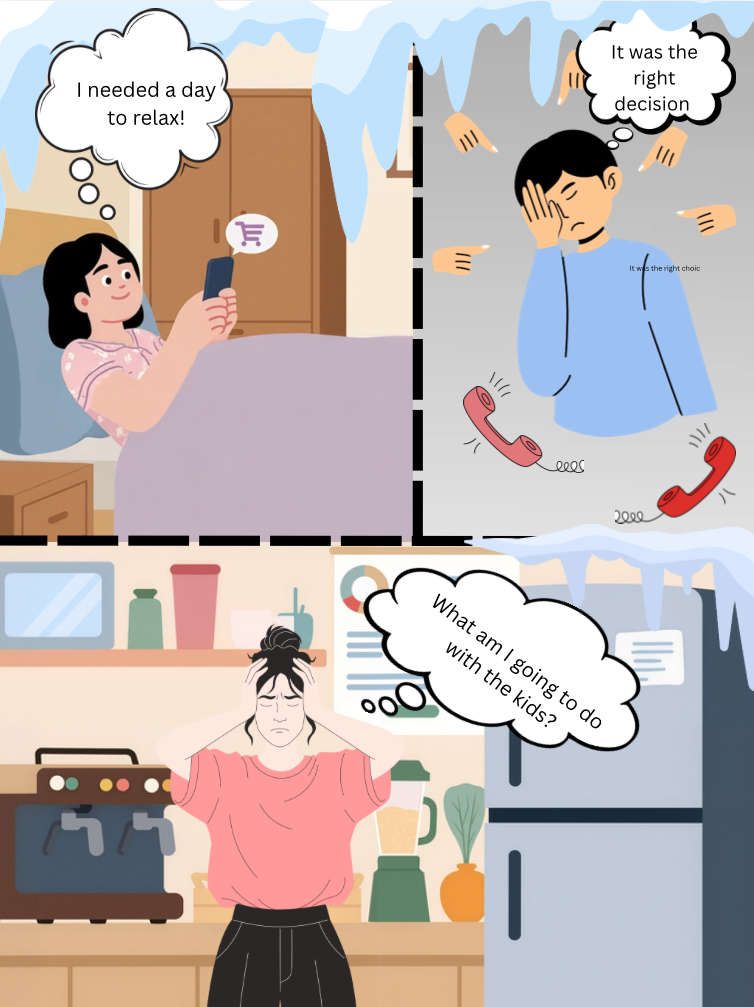
As the decision maker, White can receive backlash from both students and parents when a verdict is reached. If school remains open, students wanting the day off and parents worried about the roads or cold would not be happy. On the other hand, if school is closed, students with big exams, college classes or sports practices and parents having to find childcare may be frustrated.
“The students and families feel the pressure if in AP courses, and they have that AP exam, and now you’re losing days of instruction where you could. That may be hard to make up especially with the rigor and AP schedule. So I always hear from both sides, superintendents will tell you all the time . . . . There’s always going to be somebody upset no matter what decision you make.’ But I know students typically are always going to be in favor of that snow day. I just ask that you be respectful and just know their safety is always going to be the top priority,” White said.
In most situations, snow days are sporadic and less frequent, but this year students went seven days without instruction with snow days spanning over the weekend into the week. Sarah Pine understands the difficulty students can have focusing after such a long break and takes certain measures to make the transitions easier.
“One thing that I tried to do was keep the first day back a little bit lighter because I think I tried to kind of shift lessons around so that the first day back was not [a] crazy cognitive load. In the same way that I do at the beginning of the year or after an extended break to try to ease that transition back in,” Pine said.
The interrupted schedule can be even more damaging for the younger grades. Richfield Elementary School Principal Kirk Pavelich sees the effect of the snow days firsthand.
“Elementary kids, they just, they love to be around their teacher. They love to know what the calendar routine is. You know that they’re going to start their day with math and then they’re going to move on into reading. And so when it’s like starting and stopping, it just kind of changes the dynamic a little bit because it’s the kids who are learning how to learn. And so when they’re in and out like that, it just makes it a little more difficult,” Pavelich said.
Pavelich has similar concerns about replacing traditional snow days with online learning explaining it would not have the same effect.
“Nothing can replace the in-person interactions that students have with their teachers. I just think it’s harder when you’re trying to do a lesson online that way. It’s more challenging to build relationships. It’s harder to make the connections that help people thrive in an in-person setting that way,” Pavelich said.
Most students will always want just one more snow day. Most parents will need to pivot with each decision. Administrators will usually have to make a tricky decision. The one commonality between the groups? Everyone just might appreciate the summer weather a bit more this year.